Case File 02 · Lost Places

Lost Cities and Puzzling Sites

Archaeology rarely delivers a single dramatic answer. It works by layers, dates and patient elimination. These sites have given up a great deal, yet each one still holds back the question we most want answered.

Begin With Roanoke

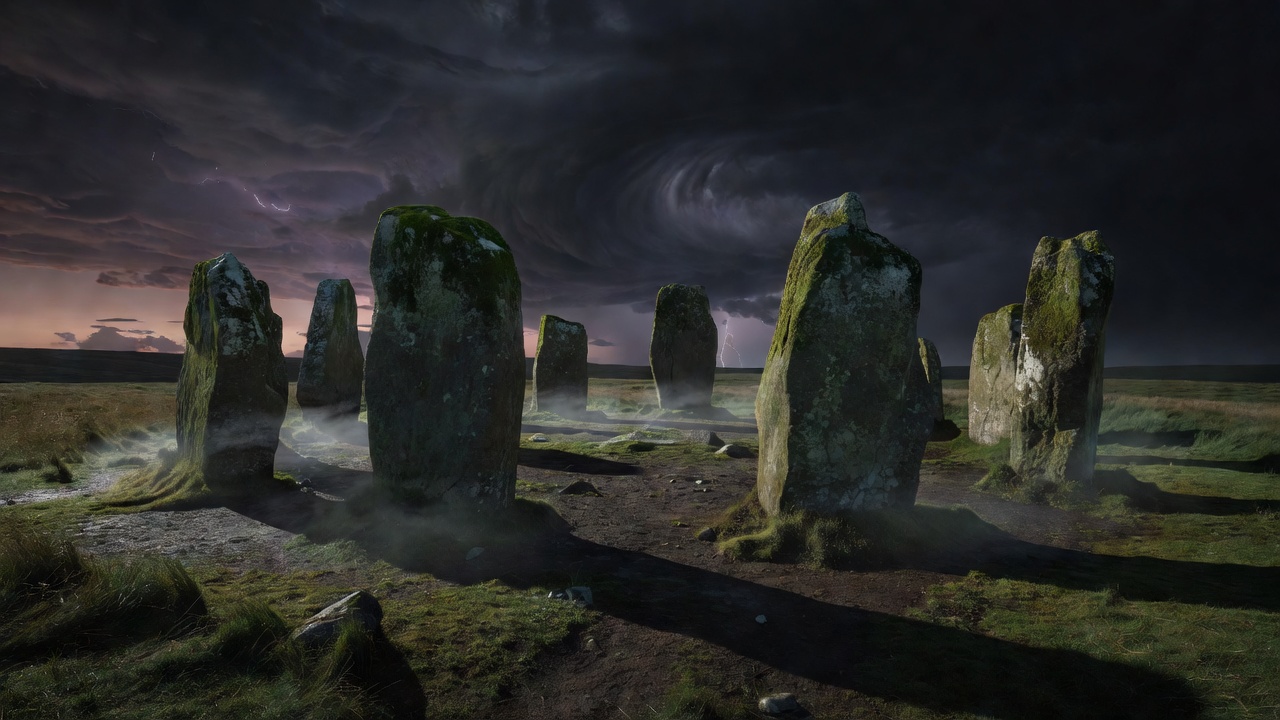
Weathered megaliths standing in a ring under heavy evening clouds

Roanoke: One Word on a Post

In 1587 more than a hundred English men, women and children settled on Roanoke Island, in what is now North Carolina. Their governor, John White, sailed home for supplies; war with Spain delayed his return until August 1590. He found the settlement dismantled, not burned, and the word "CROATOAN" carved into a palisade post, with "CRO" cut into a tree. The colonists had agreed to carve a cross if they left in distress. There was no cross.

Croatoan was the name of a nearby island, now part of Hatteras, and of the people living there. White never reached it. Recent excavations on Hatteras and on the mainland have found European objects in Indigenous contexts, but none can yet be tied to the 1587 colonists with certainty.

Known
The settlement, White's return and the carved word.
Guessed
Assimilation with the Croatoan people or a move inland.
Open
Where the colonists, including Virginia Dare, ended their lives.

Göbekli Tepe: A Temple Before Farms

On a hill near Şanlıurfa in southeastern Türkiye stand massive T-shaped limestone pillars carved with foxes, boars, vultures and scorpions. German archaeologist Klaus Schmidt began excavating in 1995 and argued the site was built around 9500 BCE by hunter-gatherers, upending the assumption that monumental building came only after agriculture. It became a UNESCO World Heritage Site in 2018.

Later work has found evidence of houses, water collection and daily life, softening the early picture of a purely ceremonial "first temple". The debate is now about what kind of community built it and why the enclosures were eventually backfilled.

Known
The date range, the carvings and the scale of the work.
Guessed
Feasting site, sanctuary, permanent village, or all three.
Open
What the imagery meant to the people who carved it.
The colonists had promised a cross if they were in danger. The absence of that cross has been argued over for more than four hundred years.

Archivist's note on Roanoke

Stonehenge and Its Travelling Stones

Stonehenge on Salisbury Plain was built and rebuilt in stages between roughly 3000 and 2000 BCE. Its smaller bluestones were traced to the Preseli Hills in Wales, about 225 kilometres away. In 2024 a study in Nature led by Anthony Clarke showed that the six-tonne Altar Stone came from northeast Scotland, more than 700 kilometres away. How it travelled that far is not known.

Known
Construction phases, solstice alignment and stone origins.
Guessed
Overland sledges versus coastal boats; ancestral or calendrical purposes.
Open
The route of the Altar Stone and the full meaning of the monument.
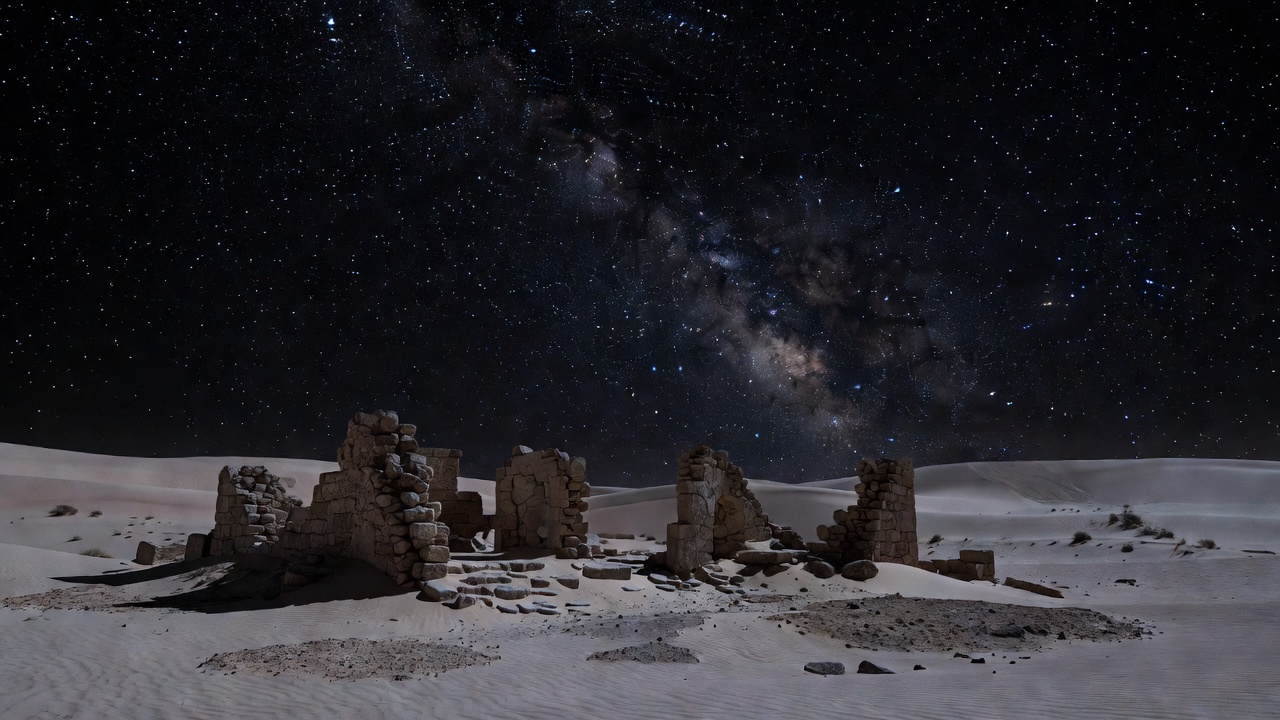
Crumbling stone ruins in a desert under a sky dense with stars
Ruins keep their own hours. Many were built to watch the sky.

Nan Madol: The City on the Reef

Off the coast of Pohnpei in Micronesia lie nearly a hundred artificial islets built from stacked columnar basalt and coral rubble. Nan Madol served as the ceremonial and political seat of the Saudeleur dynasty. It was listed by UNESCO in 2016. Uranium-thorium dating has placed some construction centuries earlier than once thought, but exactly how the heavy basalt columns were moved remains debated.

Great Zimbabwe: A Mystery That Was Never Real

Not every puzzle is genuine. The stone enclosures of Great Zimbabwe, built between the eleventh and fifteenth centuries, were the work of ancestors of the Shona people. Colonial authorities in the twentieth century promoted fanciful foreign origins and pressured archaeologists to stay quiet. The real story is one of a powerful trading city linked to the Indian Ocean gold trade. We file it as explained, with a warning about how "mysteries" can be manufactured.

The Indus Script

Cities such as Mohenjo-daro and Harappa had planned streets, drains and standardised weights. Their people left thousands of short inscriptions on seals. No bilingual text has been found, and the script remains undeciphered; some scholars even question whether it encoded full language.

Status: Open

Roanoke

Fate of the colonists unknown.

Status: Open

Indus Script

Undeciphered.

Status: Explained

Great Zimbabwe

Built by Shona ancestors.