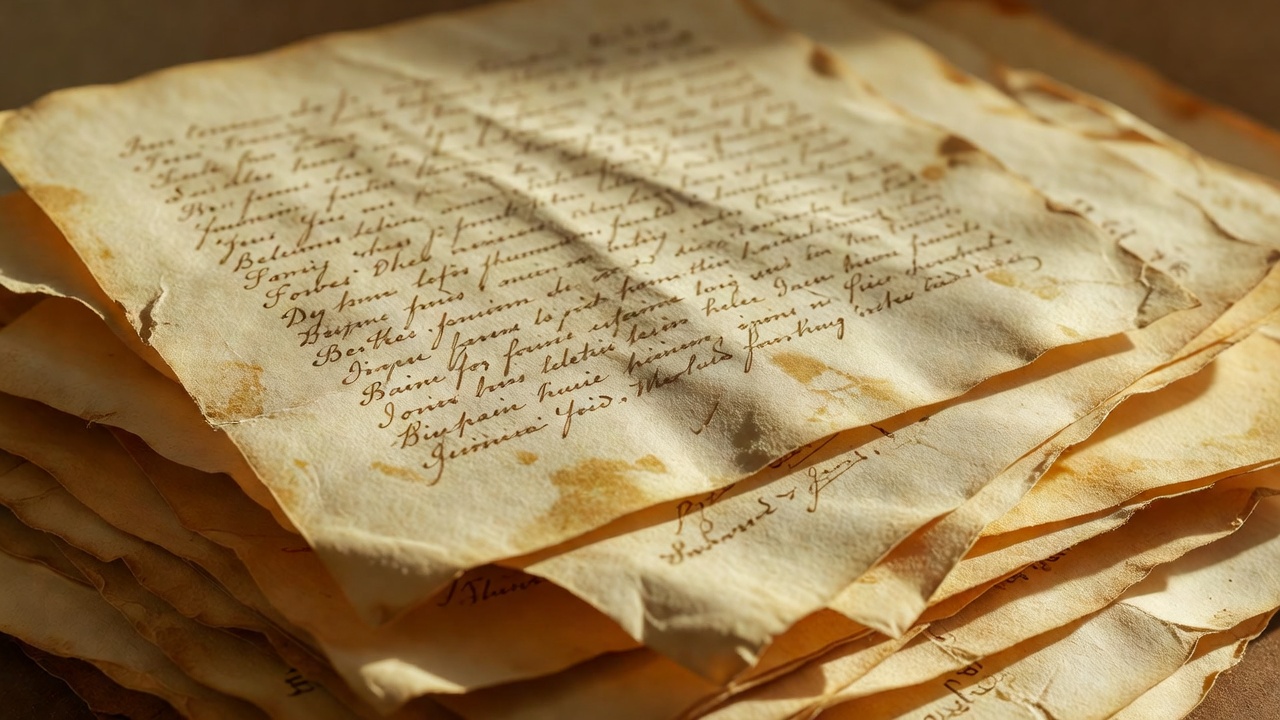
The past is stranger than the summaries suggest. These episodes are documented, sometimes in exhausting detail, and still they can sound invented. A few hide genuine riddles inside them.
In January 897, Pope Stephen VI had the corpse of his predecessor, Pope Formosus, exhumed, dressed in papal robes and seated on a throne in Rome's Lateran basilica to stand trial. A deacon answered on the dead man's behalf. Formosus was found guilty of breaking church law, his acts were annulled and the fingers he had used for blessings were cut off. Public outrage followed, and Stephen was soon deposed and killed. Later popes reversed the verdict.
The Dancing Plague of 1518
In July 1518 a woman named Frau Troffea began dancing in a street in Strasbourg and did not stop for days. Within weeks dozens, by some accounts hundreds, had joined her. City authorities, believing the cure was more dancing, hired musicians and built a stage. Physicians' notes, sermons and council records survive. Historian John Waller has argued that the episode was a form of mass psychogenic illness, triggered by famine, disease and fear of a saint's curse.
Known
Contemporary records confirm the outbreak and the council's response.
Guessed
Mass psychogenic illness (leading); ergot poisoning (less favoured).
Open
The true number affected and whether anyone died of it.
The Voynich Manuscript
Held at Yale University's Beinecke Rare Book and Manuscript Library as MS 408, this small book contains around 240 vellum pages of flowing text in an unknown script, illustrated with unidentified plants, star charts and bathing figures. It is named after Wilfrid Voynich, a book dealer who acquired it in 1912. In 2009 its vellum was radiocarbon-dated to between 1404 and 1438.
Statistical studies show word patterns resembling natural language, yet none of the many announced decipherments has convinced specialists. It might be an unknown language, a cipher, a constructed language, or an elaborate early hoax.
Known
Early fifteenth-century vellum; a provenance traceable to seventeenth-century Prague.
Guessed
Cipher, lost language, glossolalia, or deliberate nonsense.
Open
What, if anything, the text says.
Some texts were written to be read. Others seem to have been written to be wondered at.
Being dated is not the same as being understood. The vellum gives us a century; the ink gives us nothing more.
Archivist's note on MS 408
The Antikythera Mechanism
In 1900 sponge divers found a Roman-era shipwreck off the Greek island of Antikythera; the following year, corroded bronze fragments were raised that turned out to contain gears. Decades of study, including X-ray tomography by the Antikythera Mechanism Research Project, revealed a hand-cranked device that modelled the motions of the Sun and Moon, predicted eclipses and tracked the four-yearly cycle of athletic games. It is now in the National Archaeological Museum in Athens. Its function is largely explained; who built it, and whether others like it existed, are not.
The Boston Molasses Flood
On 15 January 1919, a storage tank holding over eight million litres of molasses burst in Boston's North End. A wave of syrup swept through the streets, killing 21 people and injuring about 150. A long court case blamed poor construction and testing, helping to shape stricter engineering oversight in the United States.
The Great Emu War
In November and December 1932, the Australian government sent soldiers under Major G. P. W. Meredith, armed with machine guns, to cull emus damaging wheat crops in Western Australia. The birds scattered so effectively that the operation was widely mocked and withdrawn. Farmers later relied on bounty schemes and fencing instead.
The Year Without a Summer
The April 1815 eruption of Mount Tambora in Indonesia threw so much ash and sulphur into the atmosphere that 1816 brought snow in June in New England and failed harvests across Europe. Confined indoors by storms at Villa Diodati near Geneva, Mary Shelley began the story that became Frankenstein.
Timeline of the File
The Cadaver Synod.
The Strasbourg dancing plague.
Mount Tambora erupts.
The Antikythera fragments are recovered.
Wilfrid Voynich acquires MS 408.
The Boston Molasses Flood.
The Great Emu War begins.
About cookies Essential cookies keep this site working. Optional ones help us see what is useful. You can change your choice at any time. Read more